

Wildlife Recording in Romania: Drop Rigs and Hard Lessons
My first drop rig in Romania failed on a hold switch. Lessons from a wildlife recording workshop with George Vlad: placement, restraint, and standards.
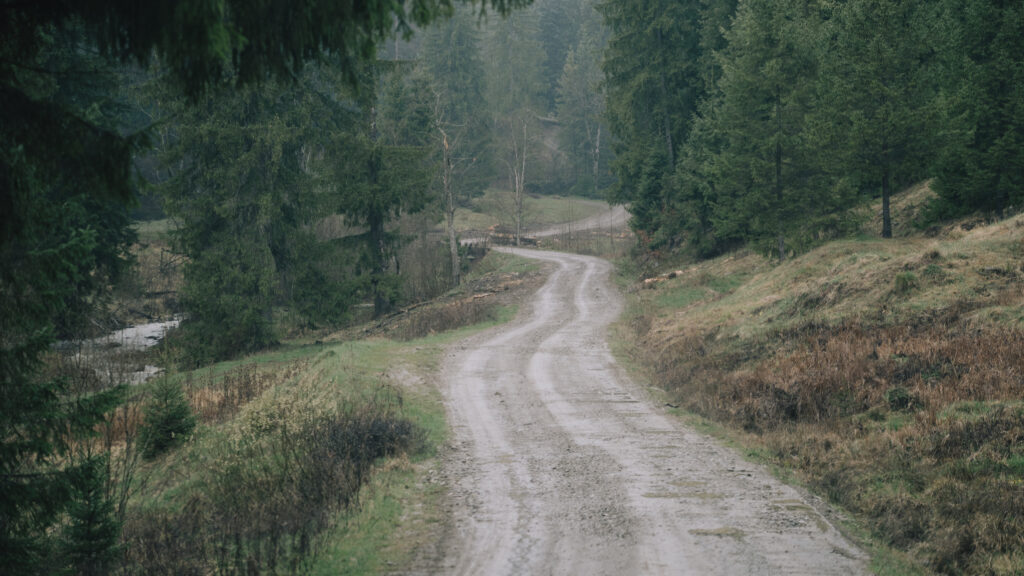
My first drop rig in Romania failed because I forgot to use the hold switch.
I would love to say the problem was more complicated, that there was some great systematic technical failure, something that I could engineer out. A marginal battery issue from the cold, a rollover bug in the firmware, a boar using the paracord as floss for its tusks.
But nope, in my haste and stress, I wired the mics to the scrub, made sure the wind protection was mounted, started the recording, slated it, and then put everything into the dry bag, hitting the stop button somehow in the process.
This was the first useful lesson of the workshop: preparation matters, but experience is the real differentiator.
Backing up, I was lucky enough to attend a field recording workshop in northeastern Romania. In the wilds near the Moldovan border, is one of Europe’s last great wildernesses. To my fellow Americans though, we just think of it as near Transylvania, the land of bats and wolves and Dracula.
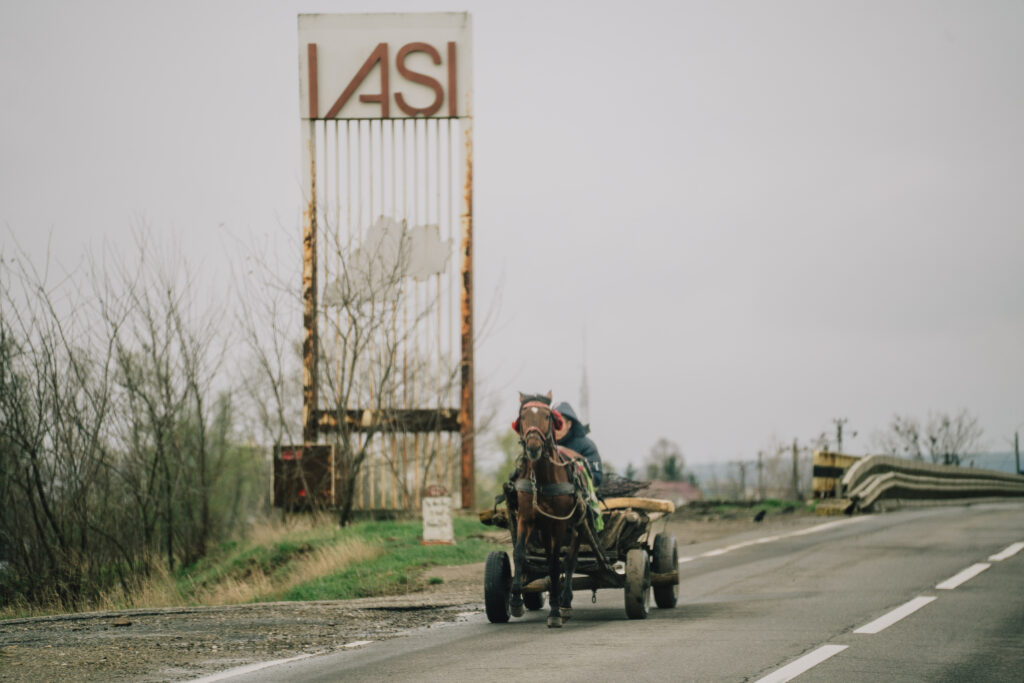
I grew up on a farm, and while it wasn’t my choice of occupation, I am more than comfortable in the outdoors and around the animals that it included, being they the more domesticated or incidental ones. Today, I am an electrical engineer by trade, and have been lucky enough to be successful and well regarded by my peers.
With that background, an outside observer would not regard me as casual, unserious, or even cavalier about an adventure like this. In my day-to-day life, I build things, test things, break things, and then put things back together again. Field recording, like ham radio, has always appealed to that part of me: microphones, recorders, analog-to-digital conversion, batteries, signal-to-noise. Technical aspects so comfortable that they can be a crutch.
Wildlife recording, I learned, was more than happy to swipe that crutch away from me, and give me a smack with it for good measure.
I came prepared, maybe obsessively so, I had built custom microphones, ordered recorders from Japan, microSD cards from B&H, wind protection from Bubblebee, drybags, labels, Super 33 electrical tape, silica gel packets, and hours and hours of bench testing. After settling the logistics, I was excited for the day to come, and maybe just a bit cocky.
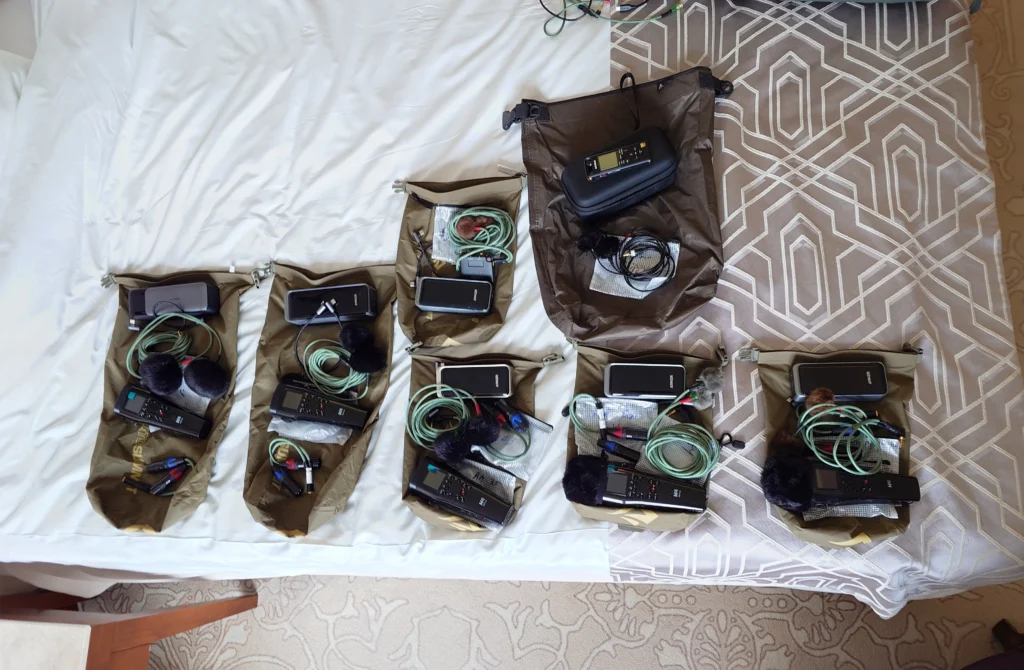
Engineering and organization got me to Romania. If this were a start line on a race it might even be the equivalent of pole position, but that’s just the /start/ of the race.
The next useful lesson came from a Northern Lapwing.
We were driving along a road when our expedition leader spotted lapwings over a field. He mentioned that they can sound almost synthetic, like something from electronic music, which was exactly the kind of description that makes you want to hear one, I mean, how could you not. We parked on a dirt road and got out what we thought would give us the best chance to record.
For me, that meant the Sennheiser MKH8030/8050 mid-side kit in a Mini-ALTO blimp. It was the most serious professional-looking rig I had with me. In my head, that meant it was probably the right tool.
The recording is, well, have a listen…
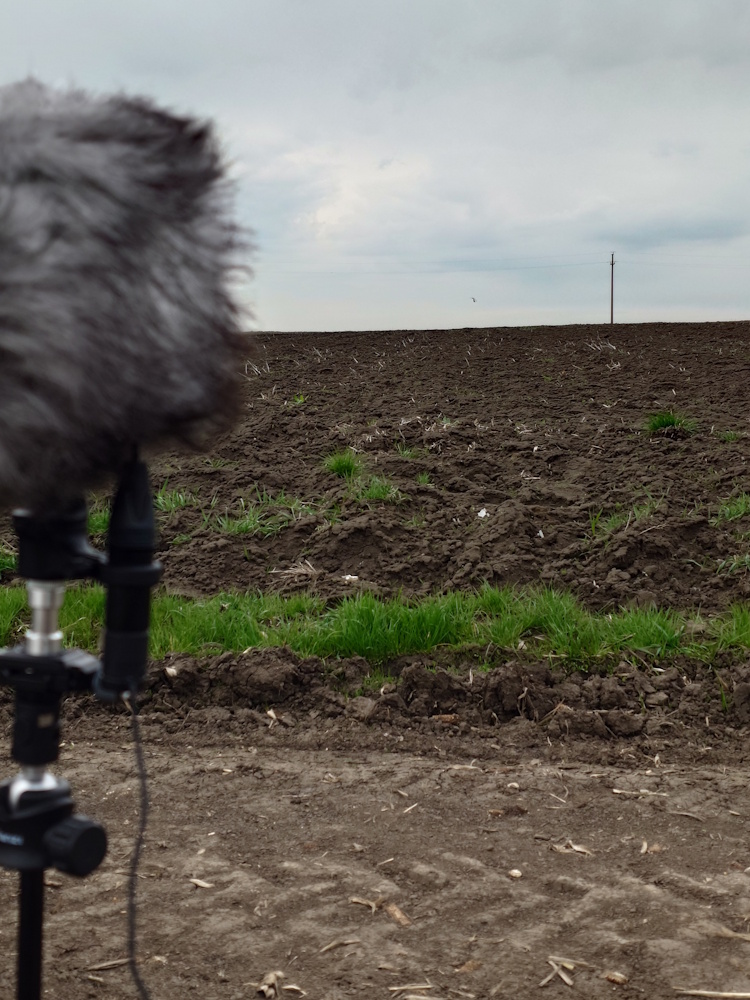
Yes, the lapwing is there, the gear was good, but it just shows how all the fancy toys and happening upon interesting sounds, does not good work make.
This was frustrating, just like the hold switch, but it was an equally useful mistake. It was one of the first times where I could separate a ‘successful attempt’ from a ‘good recording.’ We reacted quickly, chose a good kit, and captured the sound, but it still wasn’t meant to be. That recording was beyond me that day, so the more noble decision would have been to simply sit and enjoy the moment.
That was one of the big aspects of fieldcraft, and not as the rugged tree climbing affectation (although the expedition leader did climb a tree on the first day…) or the costume of the outdoors (there was a copious amount of Fjallraven being worn,) I had missed in all that reading and all those YouTube videos I’ve watched. Sometimes, all the fancy toys in the world can’t recover a moment that wasn’t planned and prepared for. Knowing when not to record is part of the craft too.
If your sound isn’t good enough, get closer.
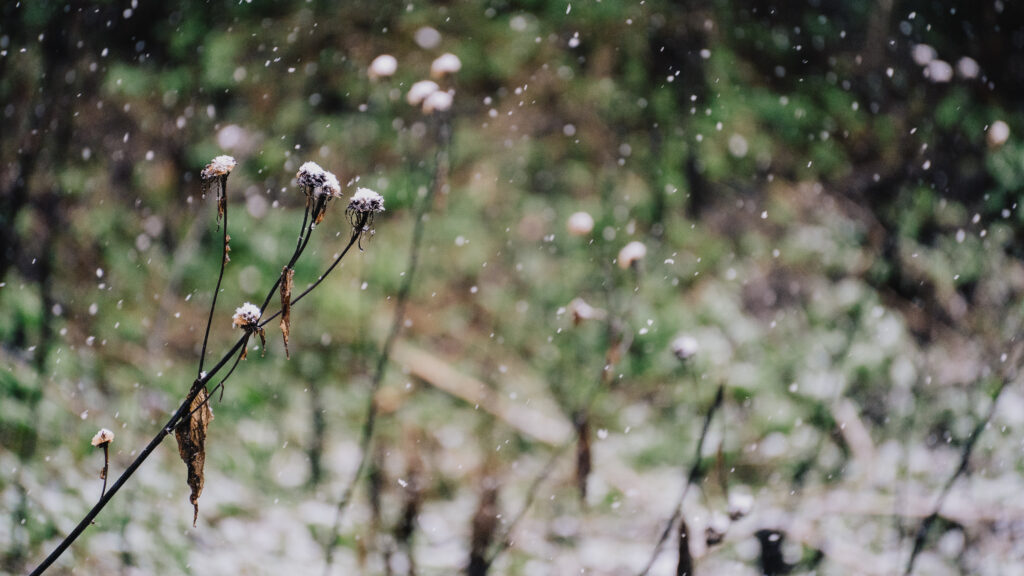
Of course, getting closer only solved one part of the problem. That is the whole idea of drop rigs after all. The other part, far more abstract, was learning what I was /actually/ trying to make.
I have, well, if you look at my other work on YouTube (shameless plug please check it out here) a bias toward soundscapes and headphones listening. I love ORTF, binaural, or even spatial audio. Things where I can put a pair of headphones on and feel transported to that time and place. Things where the stereo image is like a warm hug. I’ve had a love/hate, but mostly hate relationship with spaced omni mics before this. I took them on my first trip to Japan, and just didn’t get anything that I felt like I could connect with, so I admit I was hesitant going into this adventure with that being the primary means of recording.
When I would set up my rigs, I kept looking for ways to make the stereo image as wide and dynamic as possible. Thick (with extra cs) trees, scrub with well spread out limbs, anything that would get me the wide AB spaced pairs that I thought I had needed. The expedition leader though, he never did. He found open trees above, or dead stumps, but he just never bothered himself too much with the spacing difference.
Here was the next mistake, I had confused width for immersion.
I kept making choices to make the image bigger, wider, and more impressive later. At the risk of using the word so many times it loses all meaning, the most immersive recording I have is of a simple chaffinch. My mics were attached to a few low branches with a clearly next to it and this little tiny chaffinch, after landing on those branches, sounds like an absolute freight train. Thank goodness for 32-bit.
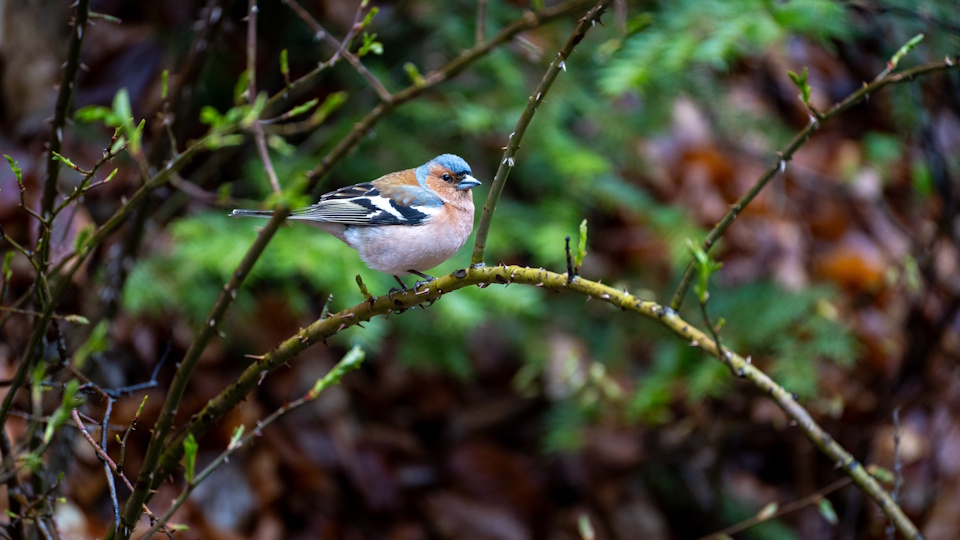
Once again, it was a hard lesson to swallow. It was not a gear failure, or a cold battery, a bumped button, or a bad solder joint. It was a failure of taste, or at the very least, a failure of judgment. I was optimizing for an effect I imagined for back home instead of the subject that was kind enough to sing for me.
Wider? Sure. Better? Nope.
Once again it brings us to fieldcraft. Knowing where to put your mics and recorder, having a good idea where a subject may land or traverse, and then the good faith to trust yourself and walk away to let it happen. Sometimes the answer is a wide soundscape, but when trying to capture a subject, just capture the subject…
At this point, with all this context, one in this field can probably guess that the expedition leader I keep referencing is George Vlad. If you’re into field recording, or wildlife sounds, you probably already know who he is, and even if not, I’m sure you’ve heard his work. If somehow you’ve made it this far into a diatribe about field recording, and genuinely don’t know, let me put it this way: George is one of the people whose recordings, expertise, and enthusiasm make you realize how high the ceiling is. He has recorded remote habitats, rare wildlife, and natural soundscapes with such a level of patience and polish that can make the whole thing seem effortless from the outside.
But like many things in life, making something look easy is the true sign of how skilled someone is.
This was one of the best things to see up close. George is easy to mythologize if you only hear the finished recordings. The locations, the tales, the clarity, the sense of being so impossibly close to something wild. It would be easy to turn him into some kind of oracle of the wild.
That was not the version that I found useful.
The useful version is far more measured. George has put in the reps. He has made enough mistakes, solved enough problems, and held himself to a high enough standard for long enough that his judgement has weight, even when it appears completely subconscious.
As part of this whole effort, he asked us to put together a reflection on the experience. Simple enough: 500 words, and a few of our favorite sounds.
Well.
If he makes it this far into this novella, he’ll probably be amused by what mistakes I made, both in practice and in thought, but that’s part of the point. “Common sense” only becomes common after enough exposure. Some people may get the process right on the first go, and that’s great! The important thing is to keep doing it. Do something long enough and that baby’s babble eventually becomes language.
You have to put in the reps.
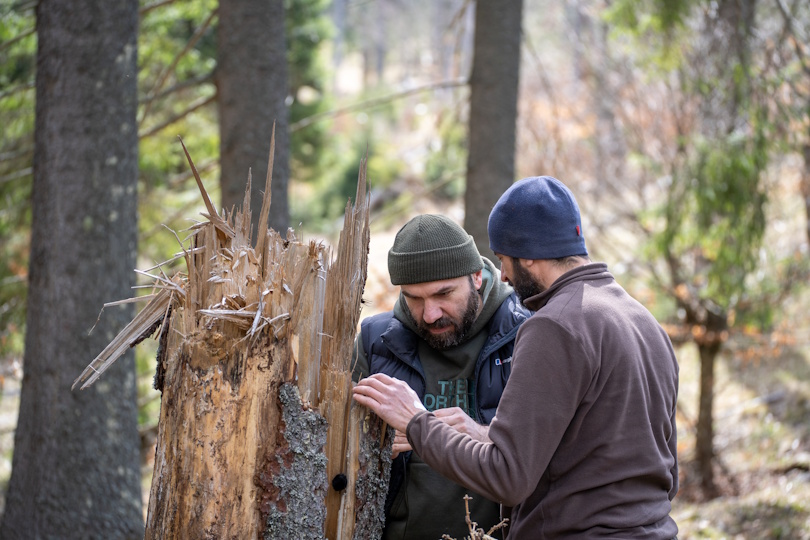
By this point in the trip, the earlier failures had made the stakes clear. This was not a subject you could just brute-force with equipment (like some of the forest trails…) A better recorder would not have made a bird come closer. A pair of MKH8020s would not make recordings more focused. No amount of Izotope RX spectral denoising could bring back what was never captured in the first place.
Those reps mattered because every story like this needs a heavy, and ours was waiting in the forest.
The Eurasian capercaillie.
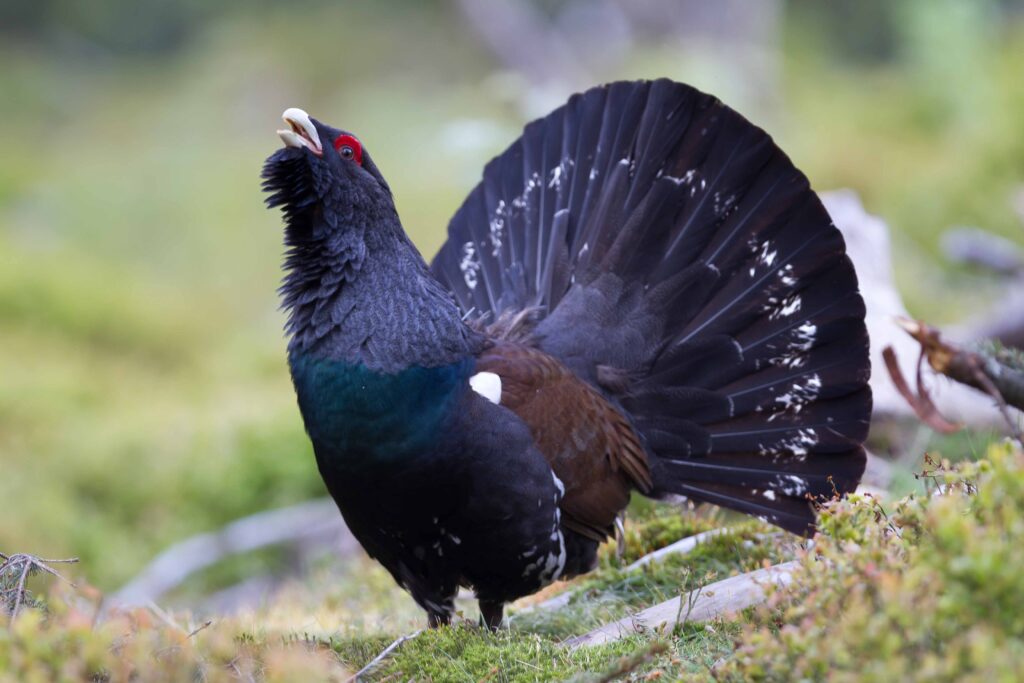

A bird of near mythological presence. Its deep call and courtship ritual (called a lek) are the kind of thing that would sound invented if someone described them to you from a barstool. These birds are strange in the best way that nature can be, not because it’s some trophy, but because it seems to carry some older version of the world with it.
A capercaillie is a large grouse, heavy and deliberate. It clicks, pops, scrapes, beats its wings, and releases guttural bursts that seem halfway between animal, machine, and something sampled for a creature sound in a movie.
With all that amazing weirdness in play, the assignment became simple: make sure the equipment worked, make sure the placement was sound, and do not take unnecessary risks.
After about three hours of riding in the back of a lifted Jeep on dirt roads, past monasteries, left over trenches from World War I, and hikers on the Via Transilvanica, we arrived at this little slice of the Carpathians where the birds are known to meet and roost this time of year. Thankfully, despite all the logging (the legal and the not so legal) in the surroundings, this area was still mostly intact.
We hiked down the hill past emptied vodka bottles and once there we checked the tracker’s camera traps that he had left there months before, and sadly, frustratingly, the batteries were flat. Something happened, and we weren’t able to predict exactly where these ancient wonders were doing their disco.
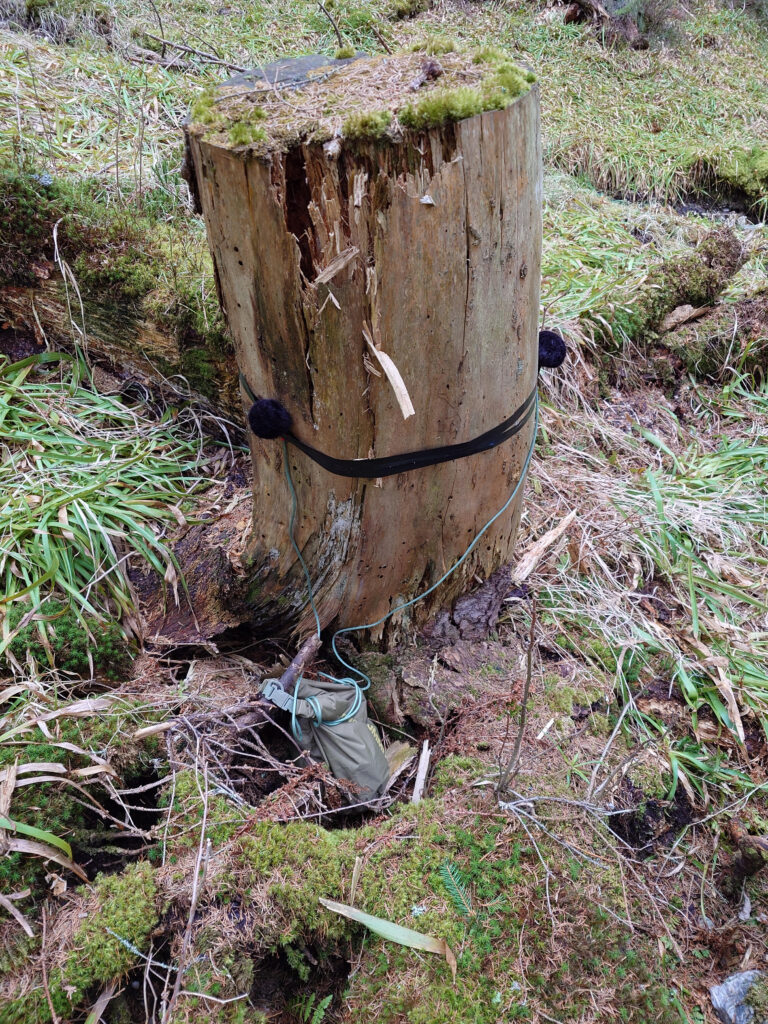
Still, at the urging of George and our tracker, I setup my rig on an old stump next to a flat clearing on a hillside. There was a small creek nearby which gave a frustrating background noise, but the birds have been known to pass through here. Recently the older dominant male has been putting on his displays further uphill, and that has been pushing the younger males down the hill. Throw in some recent droppings, and this place was a good bet. It was still a roll of the dice, there are about a dozen locations around this hillside that have shown evidence of displays this year, but I put my trust in the experts, with the experience to make the best guess.
At the very least, I told myself I’d at least have a nice recording of a creek. We came back 4 days later to pick up what we left behind, and well, here’s a snippet of what those mics caught:
Use headphones or good speakers for this one. The clicks and pops are obvious, but the recording really captures a lot of the physicality of the performance especially toward the end.
Knowledge, experience, and a little bit of luck won (well, and the equipment)
Of course, getting the recording was not the end of the work.
That is the part that is especially hard for an amateur, in that now that I went out and collected something, that clay still required kneading into a usable form.
After a hard days work, it is easy to treat a recording as valuable because it was hard to get. The hike was hard. The weather was meh. The subject was rare. The batteries survived. There are files on the SD card, so surely that means the recording is good.
Not necessarily.
Back home, the story gets stripped away. The mud is gone. We’re warm and comfortable. There are three meals a day again. The little private victory of seeing a waveform on the screens of all those Zoom M4s is over. All that remains is the recording itself, and a good recording can survive all on its own.
That is a different kind of standard for me.
I had recordings that were meaningful because I remembered the moment, but not especially meaningful to anyone else. Heck, that’s kind of the whole story of why I decided to write an app about field recording logging (check it out on iOS and Android, it’s called FieldLog.net) in general. I’ve been all over the world and recorded all sorts of things in various states of what I would consider quality, but…
If a recording is never listened to by anyone, or has no ability to stand on its own without a novella like this behind it, is it really ‘quality?’
If a tree falls in a forest and no one is around to hear it, does it make a sound?
On the last day, George walked us through a little bit of his process. He is not precious about his work. He is as clinical as a surgeon. He showed us one recording that ran for a bit less than a week, and he was able to get about 10 seconds of peregrine falcon calls out of it.
Yup. A recording that was about 500,000 seconds long. 10 seconds. That’s a useful yield of 0.002%. Seeing that really drove home how much this is like panning for gold, and how after being in the hobby now for 10 years, how little I’ve actually done. Given that my soundscapes are absolutely a gold standard of efficiency with me using almost the whole recordings.
But, that’s what it came down to, that last lesson, was standards. Once again, common sense to the audio professionals among you, but to my unrefined tastes, a mind boggling concept.
So, I took up this scalpel, and cut my own recordings down. I brought back about 520 gigabytes of audio, which works out to about 202 hours of recordings, or 8.4 days, or 727,000 seconds. From which I now have about 40 minutes, or 2,400 seconds of samples and 70 minutes of soundscape audio. Granted, a lot of them are some of the most common birds in Europe, that you could probably record just as well anywhere (see the blackbird and chaffinch recordings,) but they’re mine.
Compared to George’s 0.002%, I’m at a whopping 0.0033%, which tells me I’m likely still being a bit toooo generous with my own recordings.
And so dear reader, this brings us to the last lesson of fieldcraft from this journey. Putting together a 500 word homework assignment with a few selected sounds attached to it. Clearly, I have failed that part too.
Maybe that’s fitting.
More seriously, without a goal, be it a sample, or a song, (or even ‘content’,) bits and bytes alone on a hard drive never shared can not themselves teach you much.
That becomes the real big bad: putting the work out there.
I’ve hoped you’ve enjoyed the little story, and ideally the sounds even more. George, I’ll blame you for your inspiration and the wealth of content on your blog, and of course, not putting an upper word count on the homework.
Thanks
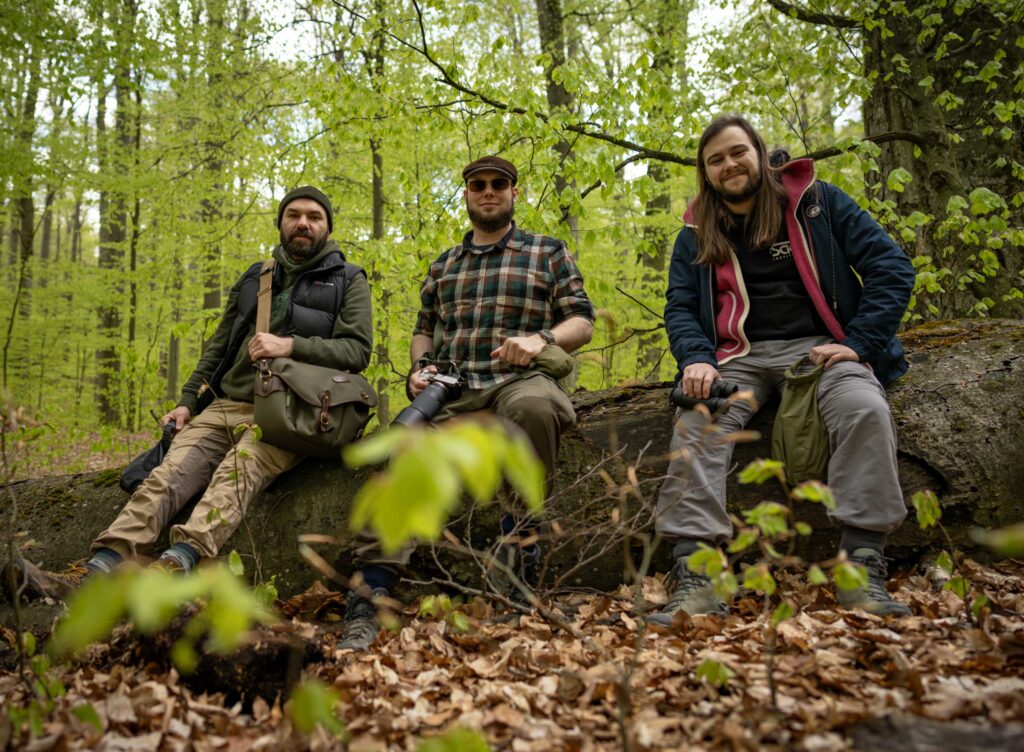
I’d like to thank George Vlad once again for the opportunity to join on this expedition. I’d like to thank him as well for the constant inspiration and aspirational dreams from his storytelling prowess on both his blog mindful-audio.com and his YouTube channel.
Thanks also to my other expedition newbie, Helio Rimaud, who’s constant smile and inquisitive nature asked all the questions I was afraid to. Check out his work with Instituto Catitu in Brazil.
Also thanks to Stelian Bodnari, our amazing tracker, who’s zeal for the forest fit perfectly with our ragtag bunch, even if we shared no common language. Check out his YouTube channel for some amazing camera trapping and nest cams. Sorry for losing my Leatherman in your Jeep, and thanks for saving it till next time!