

Zoom M4 MicTrak Mic Delete Modification
Removing the Zoom M4 MicTrak's built-in XY mics and fitting a 3D-printed flat cap: a lower, snag-free recorder for external mics. STL file included.
A Small Mod for a Slightly Weird (and Very Good) Recorder
The Zoom M4 is a strange recorder.
And I mean that in a good way.
It sits in this interesting space between something like the Zoom F3, which is almost aggressively minimal, and a more traditional handheld recorder with built-in microphones and an almost forced way of using it. The M4 tries to do both. It gives you the flexibility of onboard mics, but also the capability of a serious conventional recorder using (the same as the F3) XLR preamps and decent (but a bit low voltage) PiP capability. Not to mention, timecode!
While I like the idea of the built-in mics, 99% of the time I am using externals
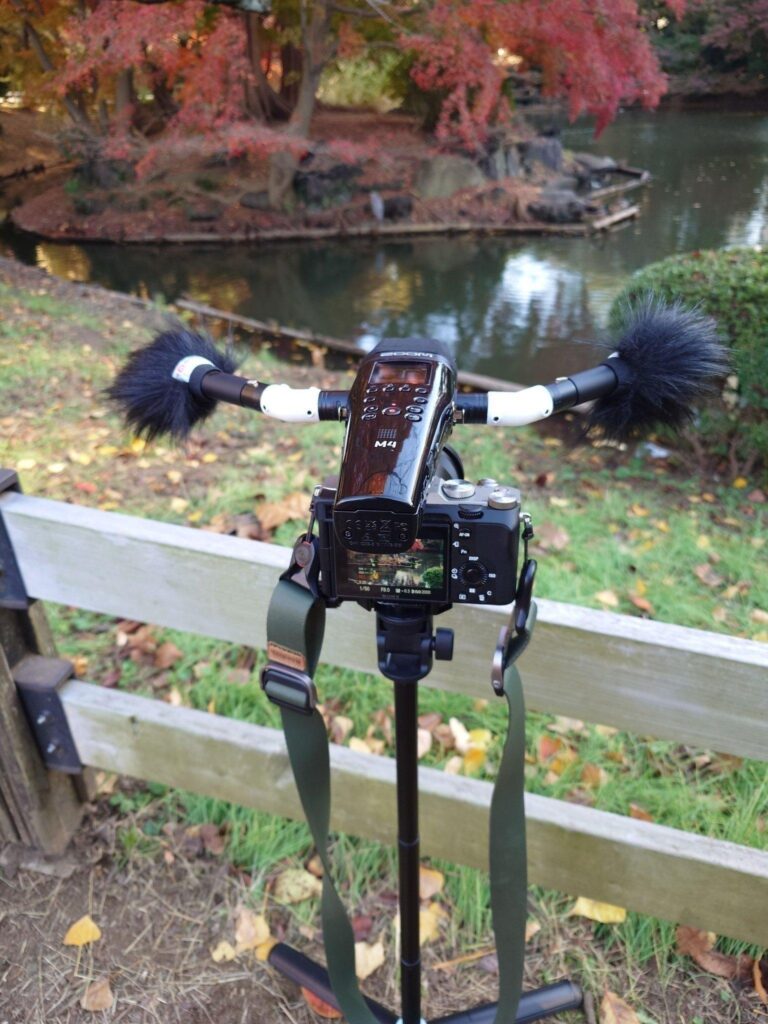
I’ll use the built-in XYs occasionally, only if I can get very close to a sound and very quickly want to grab it, and that’s assuming I haven’t already reached for the Sony PCM-A10 that’s almost always in my pocket. By and large, though, my focus when out collecting tends to be more on ambiences or soundscapes, and when you’re working that way, the built-in XY capsule and its cage become less of a feature and more of a complication.
Improving the M4’s Form Factor
After picking up a second M4 given their price, I did what any overly curious engineer might do and took the whole thing apart. I did not get many pictures, but I may open it up again to document it properly.
Inside, it is fairly monolithic. The main board is a single piece that takes up most of the internal volume and effectively defines the exterior shape. Short of something like a battery redesign, there is not much that can be done to make it a more “normal” form factor.
That said, the built-in mics are mounted on their own small assembly, and that part is easily removable.
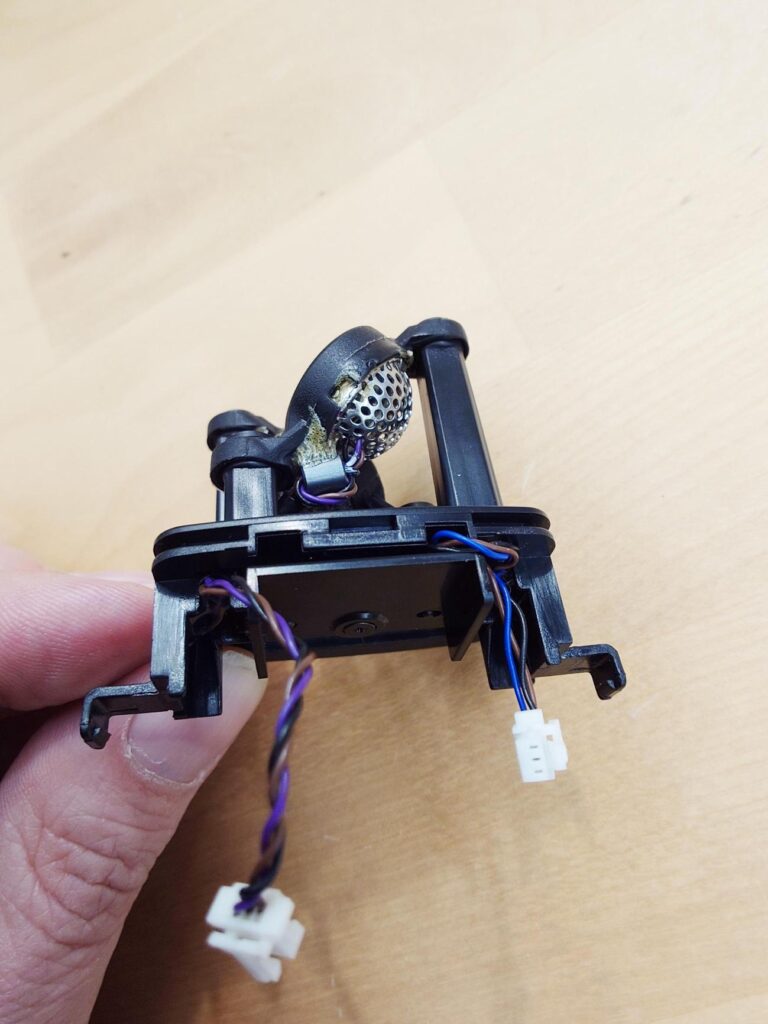
These mics are also what gave this device its rough initial reputation. Early units had RF interference issues, which is not surprising given how exposed the capsules and wiring are. You do not get to ignore physics here. The law of inverse squares comes for all exposed wires eventually…
Zoom recalled the initial batch, and seems like they added the small cylindrical ferrites that you can see glued to the bottom of the mic capsules. These act as a high impedance choke to common mode currents and help keep RF from getting into the preamps. It is not perfect, but it fixes the majority of real-world issues.
(The only real “perfect” approach is something like the Sony PCM-D100, which effectively surrounds the capsules and front end in a proper Faraday cage thanks to its all aluminum build. That is a very different design philosophy though.)
You can also see that the capsules are 3-wire electrets. That opens up some interesting possibilities for modification or replacement, maybe even swapping in something like a Primo EM273 or similar. That is a separate rabbit hole for another time.
The Mod
For the purpose of this build, I removed the entire microphone assembly and reassembled the recorder.
From there, I designed a simple low-profile replacement cap for the top and printed it in black.
Once installed it:
- Reduces the overall height of the recorder
- Protects the internal connectors
- Creates a smooth top surface that does not snag
- Makes the device easier to pack
- Adds a bit of incidental splash resistance compared to the open cage
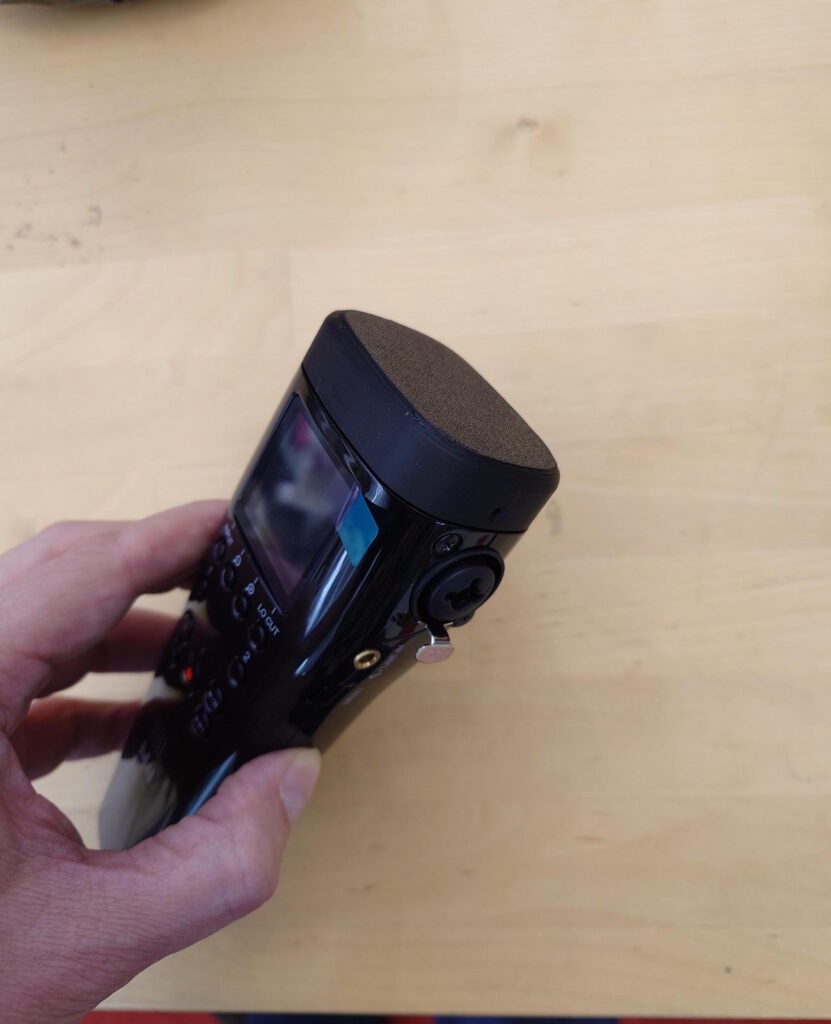
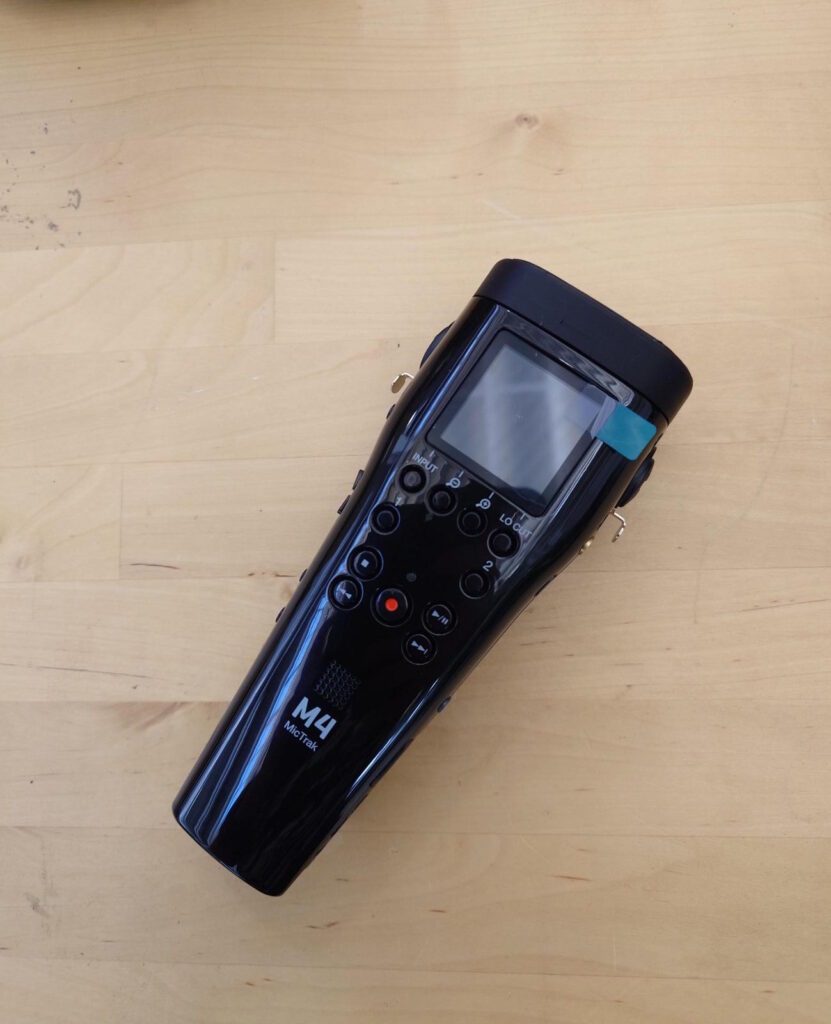
I think it turned out pretty slick.
Now the recorder takes up less room in my bag, is less likely to snag on things with that open cage at the top, and generally just feels like a more ‘me’ carry.
If you are interested in trying this out for yourself, I uploaded the 3d printer STL file to Thingiverse here.
On Weird Devices
I like when manufacturers make slightly weird devices.
Not everything needs to be perfectly optimized on the first pass. Sometimes you get better tools when companies push into the edges a bit.
The M4 certainly feels like one of those devices. In a lot of ways so was the PCM-D100, and more than a decade after its release and being discontinued, people sing its praises.
I do worry that its reception will discourage Zoom from trying things like this again, which would be a shame. I would rather see more experiments like this, even if they are not perfect, than a lineup of safe, predictable recorders.
So whoever approved and designed this thing, I am glad you did!