When I started building FieldLog one of the earliest design decisions was awkwardly simple: what word should I use to describe each captured sound file?
In the world of audio, two terms compete for this role: take and recording. Both have long histories, and both are technically correct. But I went with take.
The Split Between “Take” and “Recording”
In audio culture, these words come from different lineages:
Recording grew out of archival, ethnographic, and broadcast traditions. It simply means captured sound, whether a dawn chorus, a radio interview, or dictation. It emphasizes the act of capture itself.
Take comes from film and music studios. Each performance attempt is a take: Scene 12, Take 4, or Guitar Solo, Take 2. It emphasizes the human action of performing and trying again until it feels right.
Field recordists straddle both worlds: sometimes documenting unrepeatable natural events, sometimes directing repeatable sound effects (foley, props, movement). This dual heritage makes the language inconsistent.
Why I Standardized on Take
FieldLog’s goal is clarity and simplicity. I knew that asking users to decide between “recording” and “take” for each entry would add cognitive load. Instead, I leaned into one word—take—because:
Consistency across contexts
Whether you’re capturing a thunderstorm, a subway ambience, or ten attempts at gravel footsteps, it all gets logged as a take. You don’t need to switch mental gears.Heritage of iteration
Even environmental sounds can involve multiple attempts: different mic rigs, positions, or gain settings. “Take” reflects the experimental nature of field recording itself.Industry alignment
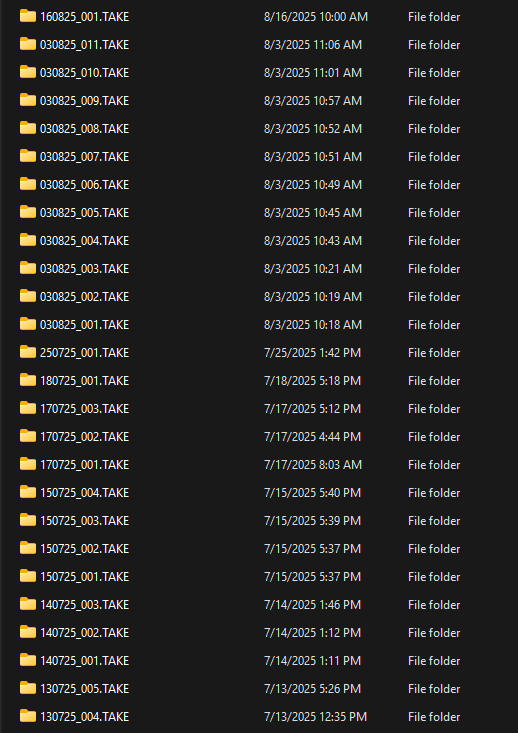
Audio recorders from most of the major brands, Zoom especially, but also Sound Devices, Tascam, and others—already call captured files “takes.” Using the same word means FieldLog feels familiar, rather than forcing you to learn a new convention.Creative workflow fit
Intended users of FieldLog aren’t just archivists, they’re sound designers, filmmakers, and musicians. In those industries, take is already the common denominator. It feels natural.
Future-Proofing Metadata
Of course, the underlying metadata in FieldLog still captures nuance: environment, subject, performance notes, number of attempts, mic rig, and so on. The word take is simply the surface label—the friendly handle for users. Behind the scenes, the metadata ensures archivists, designers, and hobbyists alike can tag, search, and retrieve their work however they want.
That being said, it’s all just bits in a computer, so it can be easily changed in the future.